
Truck Engine Overheating Causes and Fixes
Last Updated: November 23, 2026
Quick Summary
Truck engine overheating usually comes from low coolant, a coolant leak, a stuck thermostat, a failing water pump, a clogged radiator, a dead cooling fan, or a broken belt. Pull over safely, turn the engine off, and let it cool before checking anything, since pressurized coolant can cause severe burns.
Pull over and turn the engine off right away; continued driving can cause serious damage within minutes.
Never open the radiator or coolant cap on a hot engine, as steam and hot coolant can burn you.
Test the cap and do a pressure test before replacing the radiator, since a weak cap alone can cause overheating.
A cool upper hose while the engine runs hot suggests a stuck thermostat or low coolant.
Do not drive with suspected head gasket damage; stop and get a professional diagnosis.
Is your truck running hot right now?
Big Rig Repair provides 24/7 truck repair and road service with certified technicians.
Table of Contents
Why Does My Truck Engine Keep Overheating?
Truck engine overheating usually comes down to one of a few causes: low coolant, a coolant leak, a stuck thermostat, a failing water pump, a clogged radiator, or a cooling fan that stops working.
Low coolant: Not enough coolant means less heat can be carried away from the engine.
Coolant leaks: Leaks at hoses, clamps, the radiator or the water pump drop the coolant level and the system pressure.
Stuck thermostat: A thermostat stuck closed blocks coolant flow to the radiator.
Water pump failure: A worn pump cannot circulate coolant well, even when the level is correct.
Radiator blockage: Debris, scale or damage restricts heat transfer through the radiator.
Cooling fan failure: A dead fan or clutch leaves the radiator without airflow at low speed.
Belt problems: A broken or slipping serpentine belt can stop the water pump or fan from turning.
Overheating shows up as a rising temperature gauge, a warning light, or steam from under the hood. Treating the gauge as a minor issue and continuing to drive is a common mistake, heat damage builds quickly, and a cracked head or blown gasket can turn a small problem into an engine rebuild.
What to Do First When Your Truck Starts Overheating on the Road
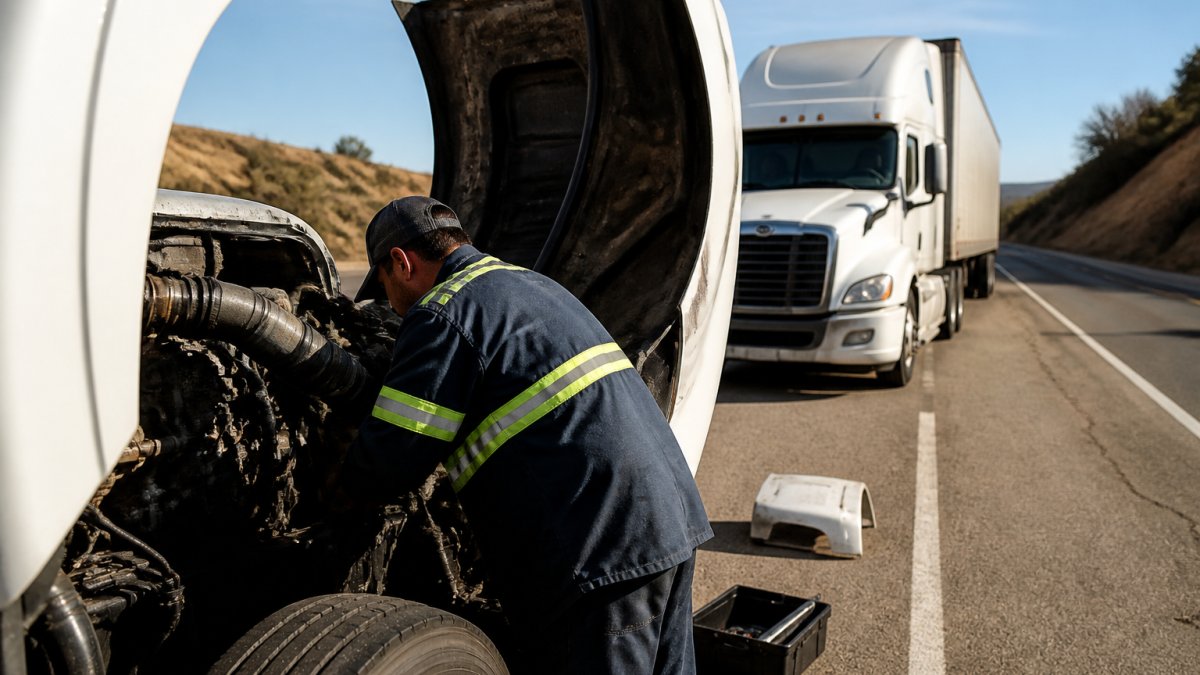
Pull over safely as soon as you can, and turn the engine off. Do not keep driving a truck that is running hot, because continued driving can cause serious engine damage within minutes.

Here is the safe order to follow:
Signal and pull to the shoulder or a safe rest area, fully off the travel lane.
Turn on hazard lights and set out warning triangles or flares if you have them.
Turn the engine off and let it sit. Do not open the hood right away.
Wait before checking anything. Coolant under pressure can cause severe burns when released.
Check the coolant level only after the engine has cooled, using the reservoir or sight glass where available.
Look for obvious leaks under the truck, around hoses and clamps, and at the radiator.
Call for help if you find a major leak, a broken belt, or the truck will not cool down.
Watch out: never remove the radiator cap or coolant cap on a hot engine. Steam and hot coolant can spray out and cause burns to your face, hands and arms.
If the coolant is low and you have the correct coolant and a safe, cool engine, you may top it off to reach a safe point. This is a temporary step, not a repair.
How to Diagnose an Overheating Engine Step by Step
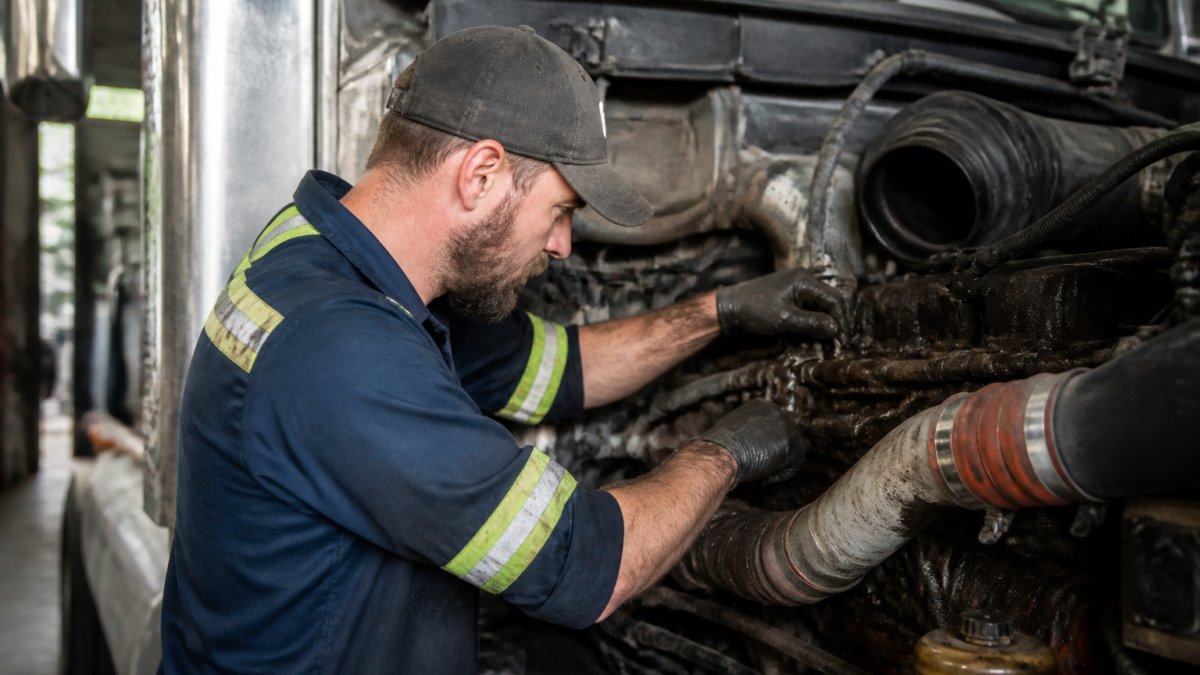
Step 1: Check the coolant level and condition. Look at the reservoir and the radiator level.
A weak cap cannot hold pressure, and the coolant boils at a lower temperature.
If the upper radiator hose stays cool while the engine runs hot, the thermostat may be stuck closed.
Check the serpentine belt for cracks, glazing, fraying or looseness.
Look for bent fins, debris, and restricted airflow through the core.
Work through each cause before replacing parts.
The steps below summarise the main checks covered in the diagnosis section, with the symptom each one points to.
Check | What it points to | Next step |
Coolant level and condition | Low level suggests a leak; milky or oily coolant suggests contamination | Look for leaks or test for combustion gases |
Upper hose stays cool while hot | Thermostat stuck closed or low coolant | Confirm the symptom before replacing the thermostat |
Engine warms slowly, never reaches normal | Thermostat stuck open | Replace the thermostat after confirming |
Belt cracked, glazed or loose | Water pump or fan may stop turning | Replace the belt and check the tensioner |
Fan never engages when hot | Fan clutch, relay or sensor problem | Check the clutch, relay and sensor circuit |
Gauge reads hot, housing reads normal | Faulty sensor or wiring | Verify with an infrared thermometer |
Bubbles, sweet exhaust smell, white smoke | Head gasket or cracked head | Stop DIY diagnosis and get a professional opinion |
Engine Overheating but Coolant Is Full: What Else Could Be Wrong
Thermostat stuck closed: Coolant stays in the engine and never flows to the radiator.
Water pump problem: A worn impeller or failing pump may not move enough coolant.
Clogged radiator: Internal blockage restricts flow even when the level looks correct.
Failed cooling fan: Without airflow, the radiator cannot shed heat at low speeds or idle.
Head gasket leak: Combustion gases can enter the cooling system and push coolant out, pressurizing the system and causing hot spots.
Restricted coolant passages: Scale and sludge inside the engine block can prevent even heat distribution.
Overheating under specific conditions: Some trucks only overheat when hauling heavy loads, climbing grades, or idling in traffic. This often points to a fan or airflow issue.
Check for combustion gases in the coolant and look for oil in the coolant or coolant in the oil. These signs suggest a head gasket issue, which needs professional diagnosis before any repair decisions are made.
Temporary Fixes for an Overheating Truck and What They Cannot Solve
Topping off coolant: This may let you drive a short distance, but it does not stop a leak.
Running the heater on full: The heater core can pull some heat away from the engine. This can lower the temperature a little in an emergency, but it can also make the cab very hot.
Idling with the fan on: Running at a low, steady idle with the cooling fan working may keep temperature down for a short time. This does not solve a stuck thermostat or a failing pump.
Driving at reduced speed: Lower speed can reduce load on the engine, but continued driving on a hot engine still risks damage.
These steps cannot fix a failed water pump, a stuck thermostat, a blown head gasket, a broken belt, or a clogged radiator. Driving on a temporary fix can cause serious engine damage, so get the truck inspected as soon as you can.
Repair Costs and Urgency by Failure Type
Repair costs vary widely with the truck, the parts needed, and the labor involved, and no shop can quote a firm price without seeing the truck. What follows is a guide to relative urgency so you can prioritize repairs and decide when to stop driving.
Loose clamp, cracked hose or small leak: Often a simple repair, usually a clamp, hose, or fitting. Urgency is moderate: fix it promptly, because a small leak becomes a low-coolant overheat under load. A pressure test confirms the location before parts are swapped.
Stuck thermostat or radiator cap: Often a modest repair, but should be fixed before the engine overheats again. A cap is a small part and is worth replacing whenever the system is opened. A thermostat that fails closed can overheat an engine in minutes under load, so do not defer it.
Broken or slipping belt: Needs immediate replacement, because the water pump and fan may stop working. Driving without a working belt risks far more damage than the belt itself. If the belt is glazed or frayed, replace it and check the tensioner and pulleys at the same time.
Failed cooling fan or fan clutch: Repair needed soon, especially for trucks that idle or climb grades often. A fan clutch or electric fan motor is a mid-range repair; the risk is overheating at low speed and in traffic, which is exactly when a heavy truck has the least airflow.
Water pump failure: Stop driving and get the pump replaced before the engine is damaged. A failed pump can take the belt and fan with it. Weep-hole leaks and bearing noise are early warnings worth acting on.
Radiator damage or clogging: Repair or replacement depends on the extent of the damage. A clogged core may respond to a flush, while a cracked tank or bent core needs replacement. Confirm the diagnosis with a flow or pressure test before replacing a radiator.
Head gasket or engine damage: Highest urgency. Do not drive the truck. Get a professional diagnosis and an estimate before deciding on next steps. This is the outcome most worth preventing, because the damage can be severe.
A practical way to prioritize: anything that stops coolant circulation (belt, pump, thermostat stuck closed) is a stop-driving problem, while anything that reduces cooling capacity (clogged radiator, weak fan, small leak) is a fix-soon problem.
For an accurate estimate on your truck, contact Big Rig Repair for a written quote based on your truck's condition.
Booking a Cooling System Inspection Before the Next Haul
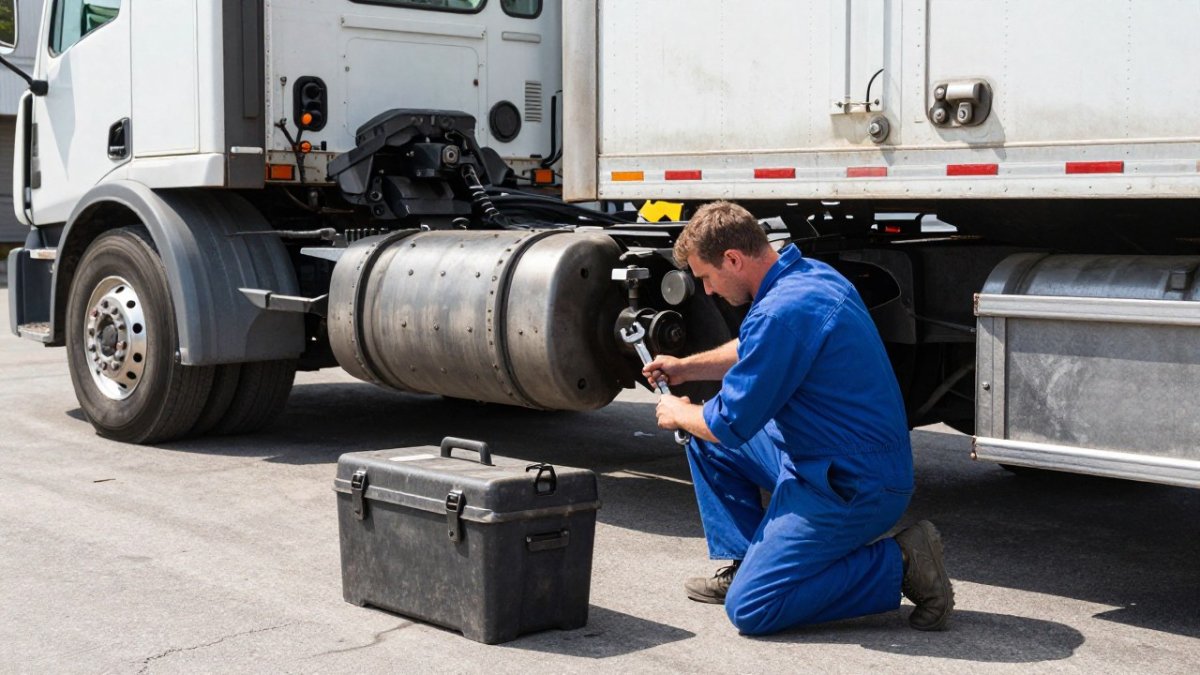
Big Rig Repair offers 24/7 big rig repair and road service, with certified technicians who use advanced diagnostics. If your truck is running hot now, contact Big Rig Repair for urgent or scheduled service. You can also review the shop's engine diagnostic services to see which checks are available. For a deeper look at the process, read mobile diesel engine diagnostics, or see how to handle an emergency truck repair as an owner-operator.
For a sense of what serious engine damage can cost, read our guide on what a semi truck engine rebuild really costs. Catching overheating early can help prevent more serious damage.
Overheating is a warning, and every hour spent driving a hot truck raises the risk of major damage. Call Big Rig Repair now for fast, certified help that gets your fleet back on the road.
Frequently Asked Questions
What are the common causes of overheating in trucks?
The most common causes are low coolant from leaks, a thermostat stuck closed, a failing water pump that stops coolant from circulating, a radiator clogged with debris or damaged fins, a cooling fan that fails or cannot pull enough air through the radiator, and a broken or slipping serpentine belt that drives the water pump and fan. Heavy loads, towing, idling in traffic, and low engine oil can make each of these problems show up sooner. Check coolant level and fan and belt condition first, since those checks take minutes and often point to the cause.
Can you fix an engine that overheated?
Often yes, but the outcome depends on how long the engine ran hot and how hot it got. A brief overheating event caused by a stuck thermostat or a loose belt may leave no lasting damage once the cause is fixed. Prolonged overheating can warp cylinder heads, blow head gaskets, or crack components, and those repairs can cost thousands of dollars. If the engine overheated badly, have a technician pressure test the cooling system and inspect for oil or coolant contamination before assuming the engine is fine.
Why is my truck overheating but the coolant is full?
A full coolant reservoir does not guarantee the coolant is moving properly. A failed water pump, a thermostat stuck closed, a clogged radiator, air trapped in the system, or a failing cooling fan can all cause overheating with a full reservoir. A bad head gasket can also push combustion gas into the coolant and create pressure. Look for a rising temperature gauge with the fan not engaging, hoses that stay cool while the engine is hot, or bubbles in the reservoir.
What should you do if your truck overheats while driving?
Turn off the air conditioning and turn the cabin heater to full hot to pull some heat away from the engine. Pull over safely as soon as you can and shut the engine off. Do not open the radiator cap or coolant reservoir while the system is hot, because pressurized coolant can cause severe burns. Let the engine cool for at least 30 minutes before checking coolant level. Do not keep driving once the gauge is in the red, since continued operation can cause engine damage that costs far more than a tow.
Comments