
How to Get Semi Truck Repair on I-80 Near Sacramento
Last Updated: October 25, 2026
Quick Summary
Semi truck repair I-80 near Sacramento is available 24/7 through mobile technicians who can diagnose and fix common roadside issues like fuel problems, sensor failures, brake adjustments, and tire replacements without towing. Response times depend on location and current demand, with Big Rig Repair covering the entire I-80 corridor including West Sacramento, Elk Grove, and North Highlands.
Position your truck on the shoulder, turn on hazard lights, and set up reflective triangles at least 100 feet behind your rig for safety.
Gather your truck's year, make, model, mileage, exact location using mile markers or GPS, and a detailed description of the problem before calling for help.
Common roadside repairs include diesel engine diagnostics, fuel filter replacement, sensor cleaning, brake adjustments, and tire patching or replacement.
Roadside repair works for electrical issues, sensors, belts, brakes, and tires, but towing is necessary for engine failure, transmission problems, or heavy fuel or coolant leaks.
Big Rig Repair operates 24/7 with technicians based at multiple locations to minimize travel distance and response time.
Table of Contents
What to Do When Your Semi Truck Breaks Down on I-80
Your rig just died on I-80 during rush hour, and you need semi truck repair I-80 can provide quickly. The first 15 minutes matter more than you think.

Safety first: positioning your rig and alerting other drivers
Position your truck as far from traffic as possible. If you're on I-80, use the shoulder. Turn on your hazard lights immediately.
Stay inside your truck with the doors locked unless you're retrieving safety equipment. Never stand between your rig and oncoming traffic. If you need to exit, stay on the passenger side, away from the roadway.
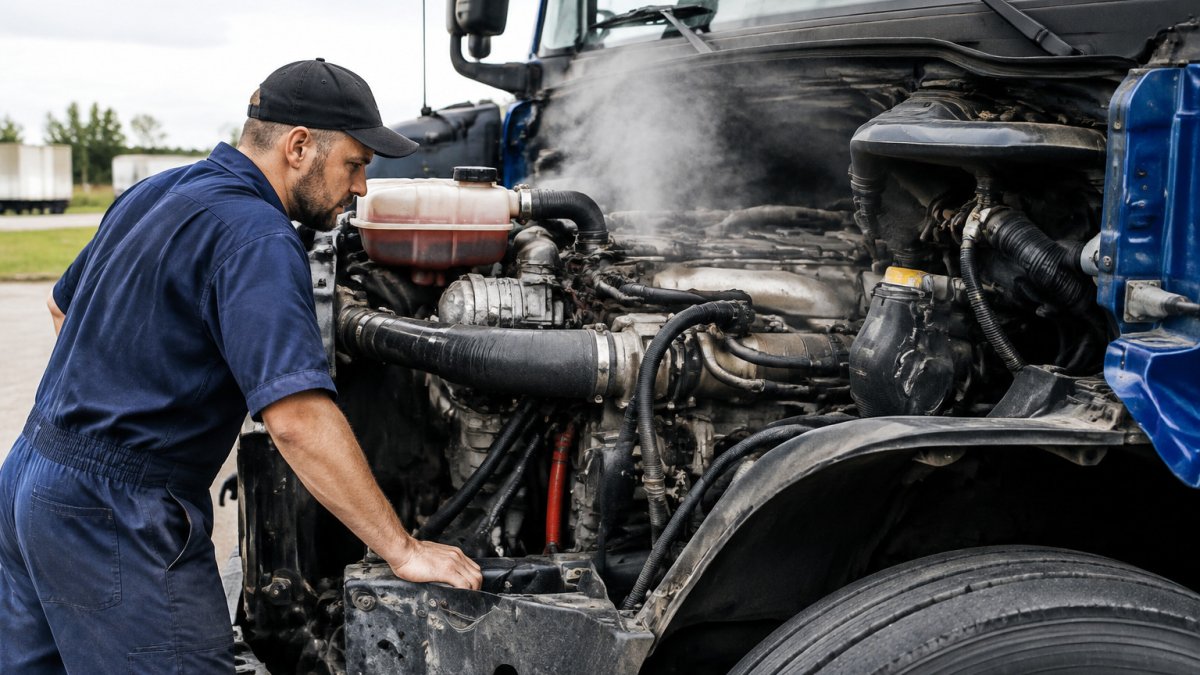
Turn off the engine. If you suspect a fuel leak or see smoke, exit immediately and move at least 100 feet away. Call 911 if there's a fire or hazardous material concern.
Information to gather before calling for help
Before you dial, write down these details. They'll speed up dispatch and help the technician know what to expect. Have your truck's year, make, model, and mileage ready.
Describe what happened. Did the engine shut down, or is it running rough? Are you seeing warning lights on the dashboard? Is there unusual noise, smoke, or fluid leaking?
Write down your exact location. Use mile markers or nearby exit numbers if you know them. GPS coordinates are helpful too.
Mobile Semi Truck Repair Sacramento Technicians Can Handle Roadside
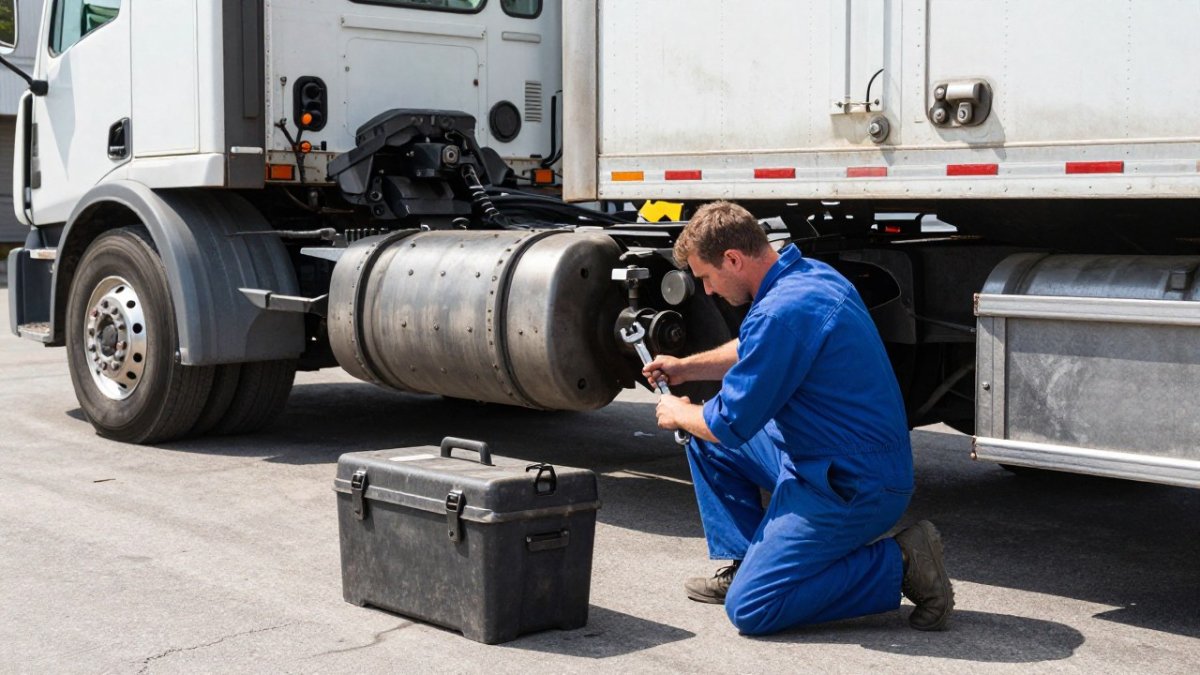
Not every breakdown requires a tow. Many issues can be fixed right where you are, which means you're back on the road faster. Big Rig Repair's mobile technicians are equipped to diagnose and repair common problems without moving your truck to a shop.
Diesel engine diagnostics at the roadside
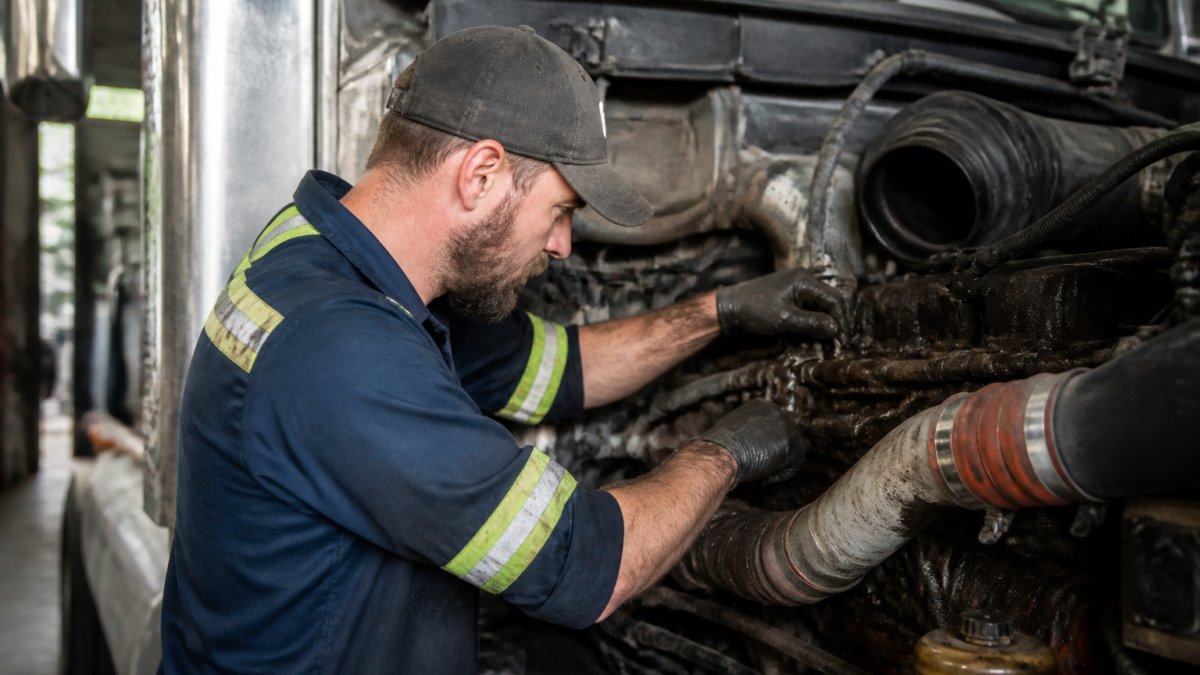
Modern diesel engines have sophisticated computer systems. A roadside mechanic can connect diagnostic equipment to read your engine's fault codes. This tells you exactly what's wrong, not just what symptoms you're experiencing.
The technician plugs in a scanner, reads the codes, and cross-references them against your truck's maintenance history and known issues.
Common roadside diesel repairs include fuel filter replacement, sensor cleaning or replacement, electrical connection repairs, and belt adjustments.
Brake and tire repairs that don't require a shop
Brake problems are the second most common reason for breakdowns. A technician can inspect brake lines for leaks, check brake fluid levels, and replace brake pads or drums if they're accessible. Air brake systems on commercial trucks can be bled and adjusted roadside.
Tire failures strand more trucks than engine problems do. A roadside technician can patch a repairable puncture, replace a damaged tire with a spare, or swap in a new tire if you have one. For trailers with tire issues, the same applies.
24/7 Truck Roadside Assistance Sacramento: Response Times and Coverage
When you call Big Rig Repair for emergency semi truck repair on I-80, you're not waiting for business hours. Our 24/7 dispatch system means help is available any time, day or night, weekday or weekend. Response time depends on where you are and current demand.
How fast technicians arrive during peak and off-hours
During daytime hours on weekdays, I-80 sees heavy traffic and more breakdowns. Late night and early morning typically see faster response because fewer trucks are on the road and technicians have shorter distances to travel.
Weather and road conditions affect dispatch too. If there's an accident blocking lanes or heavy snow, technicians may take longer to reach you safely.
Weekend and holiday response times are similar to weekday times. Your breakdown doesn't wait for Monday morning, and neither do we.
Service area coverage around I-80 and nearby routes
Big Rig Repair covers the entire I-80 corridor near Sacramento for semi truck repair I-80 drivers need, including areas around West Sacramento, Elk Grove, and North Highlands. We also service Highway 50, Highway 99, and major local routes where commercial trucks operate.
Our technicians are based at multiple locations to minimize travel distance. This matters when you're stranded. A technician 10 miles away can reach you faster than one 30 miles away, even if both are available. Our dispatch system knows where each technician is and routes accordingly.
Roadside Repair Versus Semi Truck Towing Sacramento
The decision between roadside repair and towing depends on what's actually wrong with your truck and whether it's safe to repair on-site. Not every problem can be fixed at the roadside, and attempting to do so wastes time and money.
When a mobile mechanic can fix the problem on-site
If the issue is electrical, a sensor, a belt, a brake adjustment, or a tire, roadside repair usually works. If your truck starts and runs but has a warning light or reduced power, a technician can often diagnose and fix it without towing.
The advantage is obvious: you're back on the road in hours, not days. You also avoid the risk of further damage that can happen during transport.
When towing to a repair facility is the right choice
If the engine won't turn over or won't stay running, towing is necessary. Transmission problems, severe engine damage, and structural issues require a shop with a lift, diagnostic equipment, and parts inventory.
If your truck has been broken down for more than a couple of hours and weather is worsening, towing gets you to shelter and a climate-controlled facility faster.
Big Rig Repair handles both. If roadside repair isn't possible, we arrange towing to a facility equipped to handle your truck's needs.
Preventive Maintenance for Commercial Truck Fleets
Breakdowns cost money in towing, repairs, lost revenue, and driver downtime. A truck sitting on I-80 is a truck not making deliveries. Preventive maintenance reduces the odds of roadside failure and keeps your fleet running predictably.
Scheduled inspections that reduce I-80 breakdowns
Regular inspections catch problems before they become emergencies. Brake fluid that's degrading, belts that are wearing thin, and sensors that are drifting out of range all show up during a thorough inspection. Replacing these components on a schedule costs less than emergency roadside repair and towing.
Inspections should include engine oil and filter, coolant, brake fluid, fuel filters, air filters, belt condition, battery health, and sensor function.
Fleet maintenance programs that fit your operating schedule
Your trucks can't all be down for maintenance at once. Big Rig Repair works with fleet managers to schedule maintenance during off-peak hours or rotation schedules that keep your operation moving. If you run eight trucks, we can service two at a time while the others stay on the road.
Preventive maintenance programs also include tracking and documentation. You'll know exactly when each truck was serviced, what was done, and what the next service date is. This record-keeping is valuable for warranty claims, insurance, and resale value.
Understanding Repair Costs and Transparent Pricing
You need to know what you're paying for before you commit to repair. Vague estimates and surprise invoices erode trust. We provide transparent communication about diagnostics, scope, and cost from the start.
How diagnostics determine the scope of repair
A technician connects diagnostic equipment and reads your truck's computer. This identifies the root cause, not just the symptom. A truck with low power might have a fuel problem, a sensor failure, or an exhaust issue. The diagnostic tells you which one. This is why diagnostics are the first step: they determine what actually needs fixing.
Diagnostic fees vary based on complexity and time required. Once the problem is identified, the technician can give you a realistic estimate for repair.
What to expect from a repair estimate
After diagnostics, you'll receive an estimate that includes labor time, parts needed, and total cost. The estimate tells you what will happen, how long it will take, and what you'll pay. If additional problems are discovered during repair, we contact you before proceeding.
For roadside repairs, costs depend on what's being fixed. A tire replacement or brake adjustment is one price. A fuel system repair is another. A full engine diagnostic and sensor replacement is different again.
Repair costs vary based on the type of problem and the work required.
Repair Type | Typical Scope | When It Applies |
Tire replacement or brake adjustment | Single component service | Roadside tire or brake failure |
Fuel system repair | Fuel filter, lines, or injectors | Fuel supply problems |
Engine diagnostic and sensor replacement | Computer scan and component swap | Warning lights or reduced power |
Brake system service | Fluid, pads, drums, or valve repair | Brake failure or warning |
Electrical or belt repair | Connection, sensor, or belt adjustment | Electrical issues or belt wear |
Frequently Asked Questions
What should I do immediately if my semi truck breaks down on I-80?
Move your rig to the shoulder if it's safe to do so, turn on hazard lights, and stay inside the cab or move well away from traffic. Call for roadside assistance right away. Have your truck's year, make, model, VIN, and current location ready. Describe any warning signs or noises you noticed before the breakdown. If the engine is still warm, do not attempt to open the hood, let it cool first. Stay visible to emergency responders and keep your phone charged.
Can mobile semi truck repair Sacramento technicians fix my rig at the roadside, or will I need towing?
Many common issues can be repaired roadside by certified mobile technicians: electrical faults, brake adjustments, tire repairs, fuel system problems, and basic engine diagnostics. Complex repairs, engine rebuilds, transmission work, or structural damage, require a repair facility. A technician will assess your situation on-site and tell you whether roadside repair is possible or if towing is necessary. This saves you time when a quick fix will get you back on the road.
How fast will 24/7 truck roadside assistance Sacramento respond to my call?
Response time depends on your location and current call volume. Response time depends on your location and current call volume, but 24/7 service means help is available at any time. When you call, provide your exact location on I-80, mile marker, or nearby exit. The dispatcher will give you an estimated arrival time and keep you updated. Having this information ready before calling speeds up dispatch and reduces your wait.
What information should I give the dispatcher when I call for semi truck repair?
Provide your exact location (mile marker, exit, or landmark), truck year/make/model, VIN, what happened (engine noise, warning light, loss of power), and whether the truck is drivable. Mention if you're carrying hazardous materials or have a full load, as this affects response and towing strategy. Tell the dispatcher if you've already tried anything (restarting, checking fluids). Clear, accurate information helps the technician arrive prepared with the right tools and parts, reducing repair time and getting you back on the road faster.
Breakdowns happen, but how you respond determines the outcome. When your semi truck fails on I-80, having a trusted partner matters. Big Rig Repair's certified technicians provide 24/7 roadside assistance with advanced diagnostics and transparent communication. We get you back on the road fast, with honest estimates and expert service. Contact us now when you need emergency semi truck repair near Sacramento.
Comments