
7 Commercial Truck Component Failures and How to Prevent Them
Last Updated: November 21, 2026
Quick Summary
Component failure prevention is the practice of finding wear in truck parts before it becomes a breakdown. Planned inspections, service and replacement keep trucks on the road and out of the shop, unlike reactive repair that waits until something fails.
Run a daily and weekly checklist covering tires, brakes, fluids, lights, battery and suspension.
Log every defect and have a technician review it before the truck returns to service.
Build the maintenance schedule from manufacturer intervals, adjusted for each truck's duty cycle.
Treat air brake leaks, a soft pedal and steering play as safety-critical and take the truck out of service immediately.
Track unplanned downtime, roadside breakdowns per 100,000 miles and repeat repairs each month.
Is your fleet due for a check?
Big Rig Repair offers 24/7 diagnostics and road service for commercial trucks.
Table of Contents
Commercial Truck Preventive Maintenance Checklist for Daily and Weekly Inspections
Truck Maintenance Schedule by Mileage: Intervals That Matter
Common Commercial Truck Component Failures and Their Warning Signs
Commercial Truck Breakdown Prevention: Measuring Your Maintenance Program
Scheduling Your Next Preventive Maintenance Service with Big Rig Repair
Every hour a truck sits on the shoulder costs money, and component failure is one of the main reasons trucks end up there. A single worn part can turn a routine run into an emergency tow. Component failure prevention is the discipline of finding wear before it becomes a breakdown, and it protects your fleet's uptime.
Preventive maintenance is the planned inspection, service and replacement of parts before they fail. It differs from reactive repair, which waits until something stops working.
The main goal is to keep trucks on the road and out of the shop. Good prevention programs help fleet managers plan repairs during scheduled downtime rather than during a delivery window.
Fewer unplanned breakdowns
Lower emergency repair costs
More predictable maintenance budgets
Longer component life
Commercial Truck Preventive Maintenance Checklist for Daily and Weekly Inspections
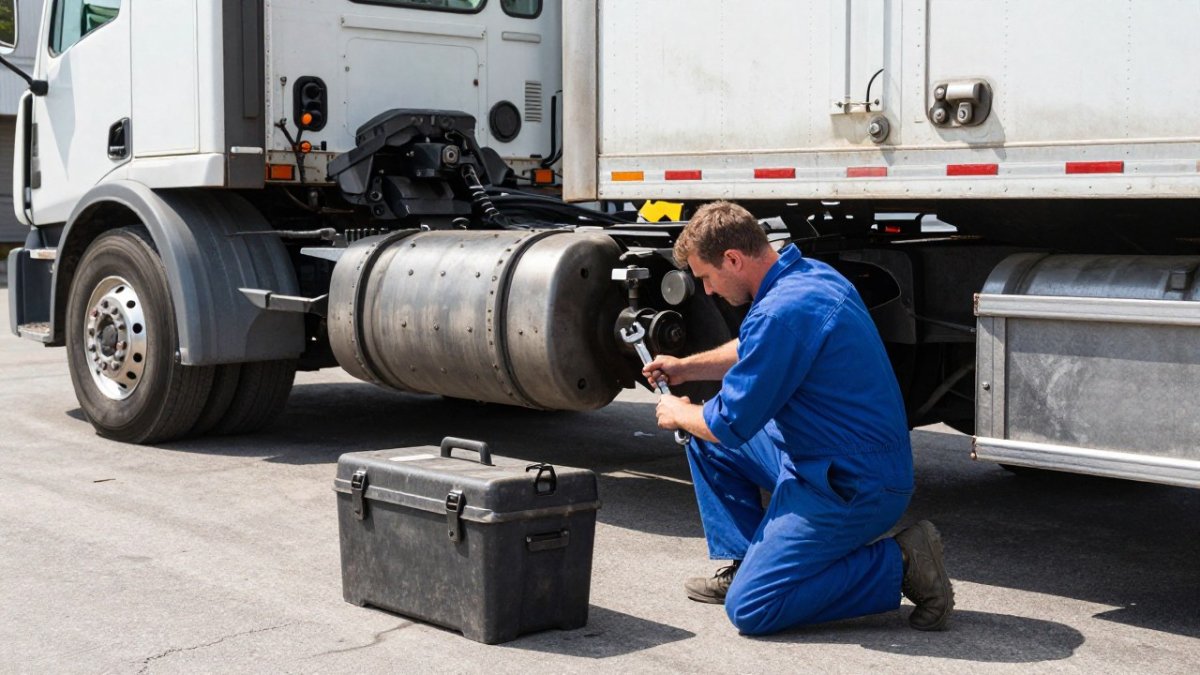
A simple daily and weekly checklist helps catch early warning signs. For the fuller picture, read the complete preventive maintenance guide for commercial fleets.
Here is a practical checklist to start with:
Tires: Check pressure, tread depth and visible cuts or bulges.
Brakes: Look for air leaks, unusual noise and pad wear.
Fluids: Check engine oil, coolant, power steering and washer fluid levels.
Lights and mirrors: Confirm all lamps work and mirrors are clean and secure.
Battery and cables: Look for corrosion and loose connections.
Suspension and steering: Watch for leaks, loose fasteners and play in the steering.
A common mistake is treating the checklist as paperwork. A checklist only helps when someone acts on what it reveals. Log every defect, and make sure a technician reviews it before the truck returns to service.

Truck Maintenance Schedule by Mileage: Intervals That Matter
Mileage is one of the most useful ways to schedule maintenance, but a mileage number by itself is not a schedule. The interval that matters is the one tied to a specific component, a specific duty cycle, and a specific inspection result. Oil changes, filter replacements, brake inspections and tire rotations often follow mileage intervals set by the engine and component manufacturers, and those intervals are the baseline, not the final answer.
Check your manufacturer's recommendations first. Intervals vary by engine, duty cycle and operating conditions. A long-haul tractor that runs steady highway miles at low idle time can often follow the book interval, while a vocational truck that idles for hours at a jobsite and makes frequent stops should be placed on a shortened interval for fluids, filters, and brake inspection.
A practical way to build the schedule is to group components by how they fail and how often they need attention:
Every fuel stop or daily walk-around: tire pressure and condition, fluid levels, lamp function, air-brake leak check, and visible leaks under the hood and chassis.
Frequent short intervals (often expressed in tens of thousands of miles): engine oil and filter service, fuel filter replacement, chassis lubrication, and inspection of belts and hoses. Follow the engine manufacturer's oil drain interval for your duty cycle rather than a single fleet-wide number.
Mid-range intervals: brake adjustment and lining inspection, air dryer cartridge service, transmission and differential fluid checks, and battery and cable condition.
Longer intervals: coolant system service, driveline and u-joint inspection, suspension and steering component inspection, and wheel-end seal and bearing checks.
These groupings are a planning framework, not a substitute for the manufacturer's published intervals. The value is that they force a conversation about duty cycle before the schedule is set. A fleet that runs the same interval across long-haul and vocational trucks will either overservice the highway trucks or underservice the vocational ones.
Keep a simple schedule that lists each component, its interval, the date and mileage of the last service, and the duty cycle assigned to that unit. This makes it easy to spot overdue items across a fleet and to see when a truck has drifted from its assigned duty cycle. When a truck moves from long-haul to local delivery, the schedule should move with it.
Watch out: a schedule built only on mileage will miss components that degrade with time or idle hours rather than miles, such as batteries, belts, hoses, and air dryer desiccant. Pair every mileage interval with a calendar or engine-hour interval for those items.
Common Commercial Truck Component Failures and Their Warning Signs
Most roadside breakdowns come from a small group of components. Knowing the warning signs for each one helps drivers report problems early.
Engine and Drivetrain Failure Modes
Engine and drivetrain problems often show up first as changes in sound, performance or temperature. Watch for:
Loss of power or hesitation under load
Unusual knocking, whining or grinding noises
Rising coolant temperature or oil pressure warnings
Blue or black exhaust smoke
Hard or slipping shifts
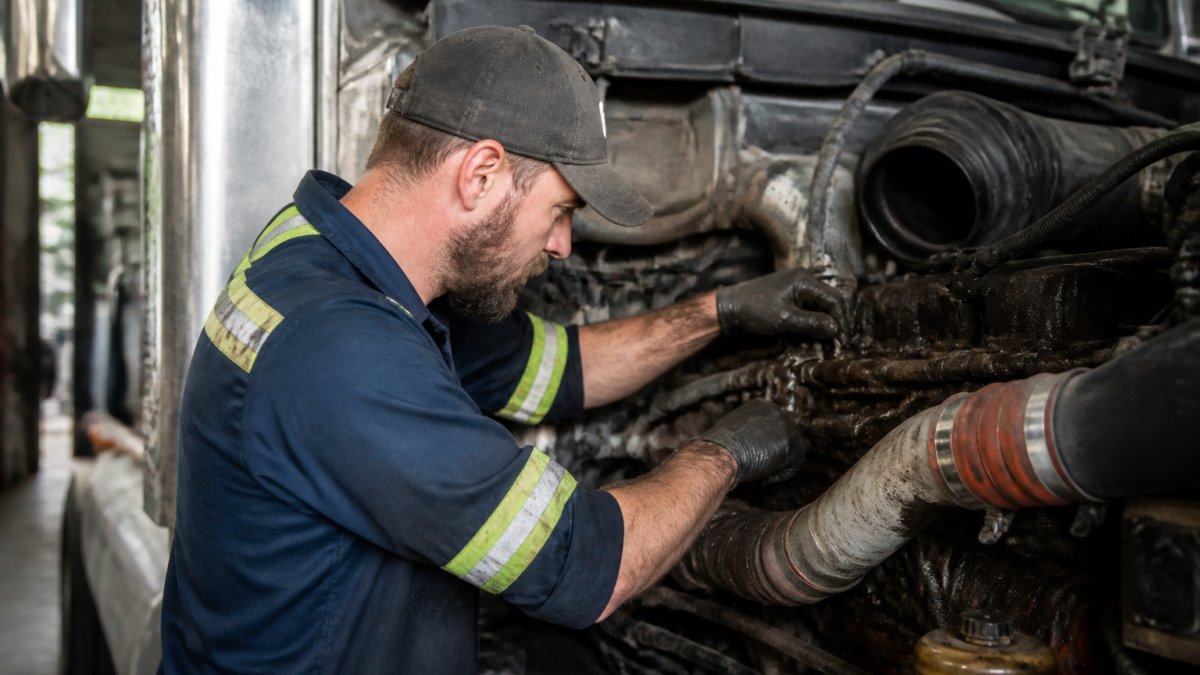
Catching these early can prevent a failed turbo, cooling system or transmission from causing further damage. See how engine diagnostics catch stability and safety problems before they reach the road.
Brake and Tire Failure Modes
Brake and tire failures are among the most serious roadside risks. Use this guide to review the detailed warning signs for brake problems before the next trip. Warning signs include:
Pulling to one side during braking
A soft or spongy brake pedal
Air leaks or long air-build times
Uneven or rapid tread wear
Vibration at highway speed
If you notice any of these, have the truck inspected before the next trip.
Condition-Based Monitoring and Prioritizing Repairs by Risk
Not every defect needs the same response, and the fleets that prevent the most failures are the ones that separate a safety-critical defect from a scheduling inconvenience. Prioritizing repairs by risk then decides what happens next.
Telematics and fault codes: J1939 diagnostic trouble codes, derate events, and fault frequency logs show which systems are complaining before a hard failure. A code that repeats across trips is a different signal than a one-time event cleared by a driver.
Fluid analysis: Engine oil, coolant, and driveline fluid samples can show coolant contamination, fuel dilution, elevated wear metals, or rising silicon from dirt ingestion. Trending a series of samples is more useful than a single result.
Sensor and performance data: Oil pressure trends, coolant temperature behavior under load, turbo boost deviation, and battery voltage at crank are all early indicators that a component is degrading between scheduled inspections.
Driver reports: Vibration, pull, noise, and shift quality reported at the end of a run are free diagnostic data. A driver who reports the same symptom twice should trigger an inspection, not a note.
A practical severity matrix ranks each defect on two factors: how likely it is to fail before the next scheduled service, and how serious the failure would be on the road. That produces four workable categories:
Safety-critical, act now: Brake air leaks, a soft pedal, steering play, tire cord or sidewall damage, and wheel-end leaks. These come out of service immediately. There is no scheduled window for a defect that can cause a loss-of-control event.
High risk, schedule within days: Repeated fault codes, rising oil or coolant temperature, driveline vibration, and battery or charging problems that could strand the truck. These get a repair slot before the next long run, not at the next routine service.
Monitor with a defined trigger: Early wear trends, a single fluid-analysis flag, or a minor leak with no performance change. Set a specific trigger, such as a recheck at the next fuel stop or a sample at the next oil change, so monitoring does not become indefinite deferral.
Routine, schedule at next service: Cosmetic damage, minor air leaks within spec, and wear that is measurable but not near the replacement limit.
Escalation criteria matter as much as the categories. A defect should move up a category when it repeats, when a fault code returns after clearing, when a fluid-analysis trend crosses a threshold, or when a driver reports a change in behavior. A defect should move down only with a documented inspection, not with a verbal assurance.
The article sorts defects into four risk categories, each with a different response time.
Risk category | Example defects | Response |
Safety-critical, act now | Brake air leaks, soft pedal, steering play | Out of service immediately |
High risk, schedule within days | Repeated fault codes, rising oil or coolant temperature | Repair before next long run |
Monitor with defined trigger | Early wear trends, single fluid-analysis flag | Recheck at next fuel stop or oil change |
Routine, schedule at next service | Cosmetic damage, minor leaks within spec | Next scheduled service |
Commercial Truck Breakdown Prevention: Measuring Your Maintenance Program
You cannot improve what you do not measure. Track a few key indicators to see whether your program works:
Unplanned downtime hours per month
Roadside breakdowns per 100,000 miles
Percentage of work orders completed on schedule
Repeat repairs on the same component
Maintenance cost per mile
Review these numbers monthly. Rising repeat repairs often point to a root cause that a single fix will not solve.
Scheduling Your Next Preventive Maintenance Service with Big Rig Repair
Planning service around your delivery schedule keeps trucks productive. Big Rig Repair offers 24/7 road service and scheduled preventive maintenance. To see the full range of diagnostic and repair services, visit our services page. To learn more about our shop and how we support fleets in the Sacramento area, read our company background.
If you have questions about scheduling or current service options, call us to discuss your fleet's needs.
Frequently Asked Questions
How often is preventive maintenance required on a commercial truck?
Most commercial trucks need a preventive maintenance inspection at regular mileage intervals, and daily pre-trip and post-trip inspections are standard practice for drivers. The exact interval depends on the manufacturer's recommendations, the engine and transmission, duty cycle, and operating conditions such as heavy stop-and-go driving or dusty job sites. Fleets typically combine a mileage-based schedule for oil, filters and fluids with periodic full inspections of brakes, tires, steering and suspension. Check your owner's manual and your fleet's maintenance records to set intervals that fit your specific trucks.
How can fleets identify truck component problems before a breakdown?
Fleets catch most problems early by combining driver pre-trip reports with scheduled inspections. Drivers should note unusual noises, vibration, warning lights, pulling to one side, longer brake stroke, and fluid leaks. Technicians can then check trends such as rising oil consumption, falling tire tread depth, or repeated battery charging problems. Tracking defects by unit and component helps reveal patterns that point to a failing part before it leaves a truck on the roadside.
How can preventive maintenance reduce truck downtime?
Preventive maintenance reduces downtime by replacing wear items on a schedule rather than after they fail. Scheduled service lets you plan repairs around dispatch and load commitments instead of responding to a roadside breakdown. Fleets that track defects and act on early warning signs usually see fewer emergency repairs and fewer tows. Big Rig Repair offers 24/7 roadside assistance.
When should a truck component be repaired or replaced?
Repair or replace a component when inspection shows it is nearing or past its service limit, or when a failure would create a safety risk or stop the truck. Prioritize brake, steering and tire defects first because they affect safety directly. Items such as worn belts or minor leaks can often be scheduled for the next planned service. Compare the cost of a planned repair against the likely cost of a roadside breakdown, including towing and lost load time.

Comments